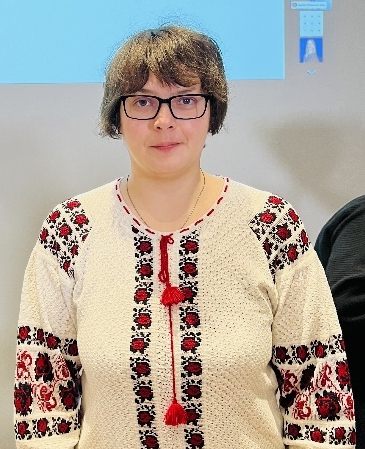
Nataliia Zalietok
Fellow 2023/2024
History
National Academy of Sciences of Ukraine, Kyiv
Imre Kertész Kolleg
nataliazaletok@gmail.com
Bio
Nataliia Zalietok is the Head of the Department for Archival Studies at the Ukrainian Research Institute of Archival Affairs and Records Keeping (Kyiv, Ukraine). Her studies are mainly dedicated to the investigation of the peculiarities of women’s military service in 20th-21th centuries and research in the field of archival science. She defended her Doctor of Historical Science dissertation at the Institute of History of Ukraine of the National Academy of Sciences of Ukraine (2022). Nataliia was awarded by the Kyiv Mayor for special achievements of youth in the development of the capital of Ukraine – the hero city of Kyiv in the nomination ‘Scientific Achievements’ (2021).
She is also a winner of the competitions ‘Young Scholar of the Year 2022’ of the Council of Young Scientists of the Ministry of Education and Science of Ukraine (nomination ‘History and Archeology’) and ‘The Best Young Scholar of the Academy 2023’ of the Council of Young Scientists of the National Academy of Sciences of Ukraine (nomination ‘History, Philosophy and Law’). Nataliia was a Northwestern Buffett Virtual Visitor in 2022 (Northwestern University, Buffett Institute, United States) and IU-Ukraine Nonresident Scholar in 2022-2023 (Indiana University Bloomington, United States). Now she is an Imre Kertész Kolleg Fellow (Jena, Germany).